
Storm Damage
What should I do if my roof is leaking during a storm?
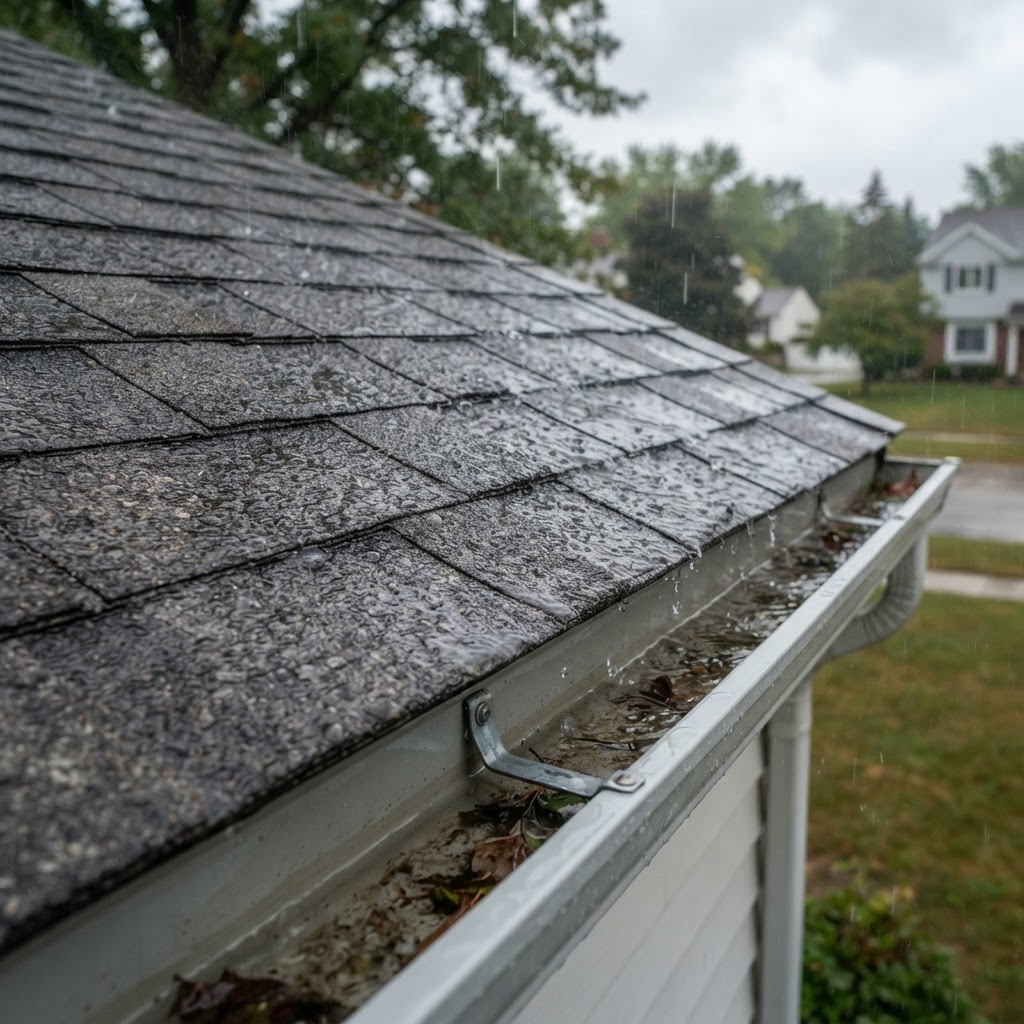
If you notice water dripping from your ceiling during a storm, place a bucket underneath the leak immediately and move your belongings to a dry spot. Do not attempt to climb onto your roof while it is raining or windy. Your safety is the first priority; call a professional as soon as the weather breaks.
Should I try to fix the leak while it is still raining?
No, stay off the roof until the storm passes and the shingles are dry. West Michigan storms bring slick conditions and gusty winds that make even a flat roof dangerous. You risk a fall, and walking on saturated shingles often causes more damage than the leak itself.
It feels desperate to want to stop the water right now. But a bucket and a towel are your best tools until the wind dies down.
How do I minimize water damage inside my house?
Clear the area around the leak and use a bucket to catch the water, then use a screwdriver to poke a small hole in the center of the wet drywall. This prevents the water from pooling behind the ceiling and spreading into a larger, more expensive mess. Place a tarp or plastic sheeting over any furniture or electronics nearby to keep your belongings protected.
Watching a stain grow across your ceiling creates a pit in your stomach. Controlling where the water goes keeps the damage contained.
Does the source of the leak always match the spot on the ceiling?
Water rarely travels in a straight line; it often runs along rafters or electrical wires before it drips onto your floor. A drip in your hallway might originate from a damaged boot around a plumbing vent ten feet away. You might see a stain near your bedroom window, but the true culprit could be a compromised shingle near the peak of the roof.
It is frustrating to look at the ceiling and not see the hole. Remember that water is gravity-fed and sneaky.
How does the Walker weather affect my roof?
Our cycle of lake-effect snow and rapid freeze-thaw cycles creates stress points that fail during heavy rain. Ice damming in winter pulls at shingles, and the rapid expansion of freezing water in small cracks makes those gaps larger by spring. When a summer storm hits, those weakened areas are the first to let water inside.
That rumble of thunder makes you wonder if your roof can take another season. Regular inspections during the dry months stop these surprises.
Frequently asked questions
Will my homeowners insurance cover this leak? Most policies cover sudden damage from storms, but they rarely cover issues caused by old, neglected materials. You will need to check your specific policy and file a claim once a professional has assessed the cause.
Can I use duct tape or caulk to stop a roof leak? Do not use hardware store caulk or tape on a wet roof, as it will not create a proper seal. Temporary tarping is the only reliable way to keep water out until a permanent repair can be made.
Is a wet attic an emergency? If water is near electrical wiring or light fixtures, turn off the power to that room at the breaker box to prevent a fire hazard. Otherwise, keep the area dry and call for help in the morning.
When to call a roofer
Call us when the storm stops so we can safely climb up and find the source of the intrusion. Whether it is a loose shingle or a failing pipe boot, we will show you exactly what is happening on your roof. Reach out to Grandville Roofing & Exteriors, and we will get someone out to your Walker home to help you get back to a dry, quiet night of sleep.
Explore Our Services
Ready to Talk About Your Roof?
Free inspections for West Michigan homeowners — no pressure, no obligation.