
Storm Damage
The West Michigan Storm & Roof Report: What Summer Storm Season Does to Your Roof
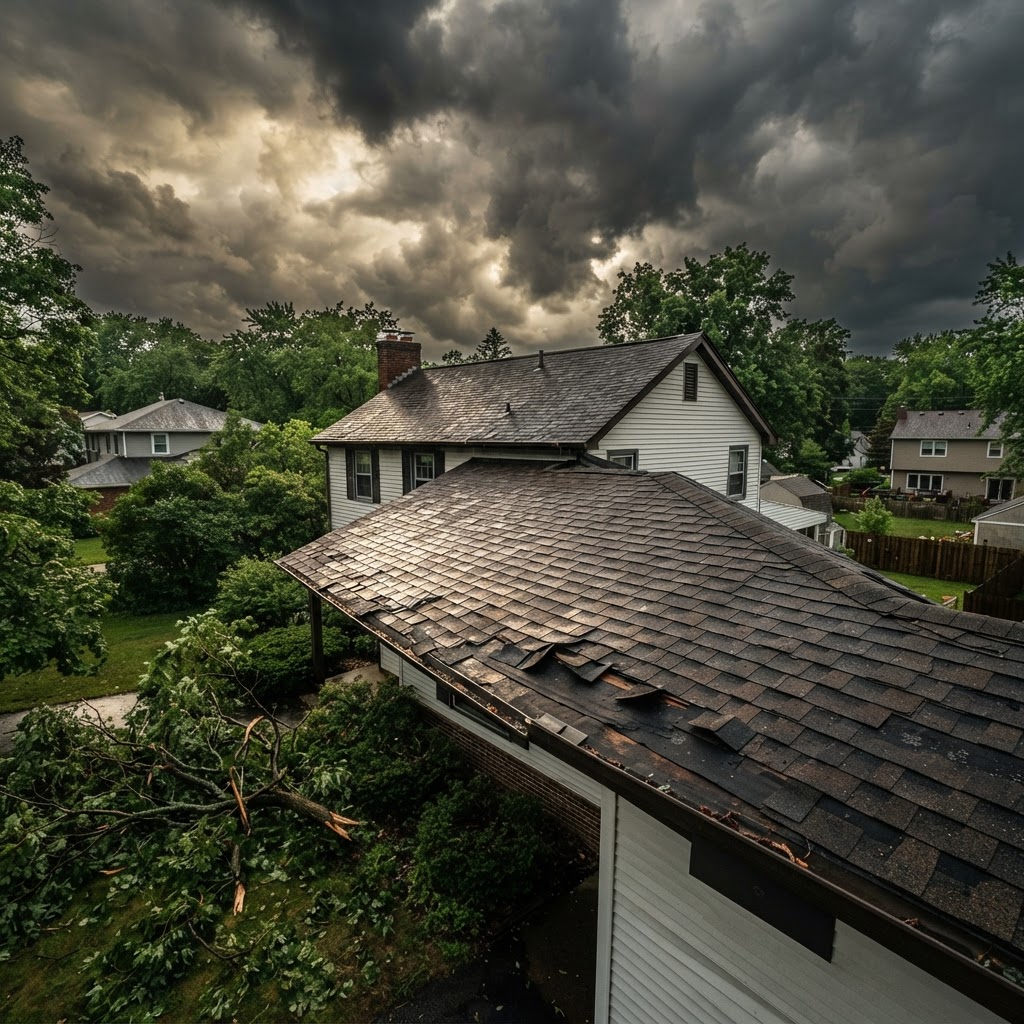
Every summer, the same pattern plays out across Kent and Ottawa counties. A line of thunderstorms rolls in off Lake Michigan on a July afternoon, twenty minutes of wind and hail later it's gone, and most homeowners look out the window, see the roof still on the house, and move on. Then in October, or during the first hard thaw in March, the ceiling stain shows up.
After more than 50 years of putting roofs on West Michigan homes, our crews have learned that storm damage is rarely dramatic on day one. This first entry in our West Michigan Storm & Roof Report covers what summer storm season actually does to a roof here, how to tell cosmetic damage from the kind that leaks, and how to handle the insurance side without getting burned.
When storm season actually happens in West Michigan
Severe weather in our area concentrates from roughly May through September, with the most damaging thunderstorm activity typically peaking June through August. The threats that matter for roofs, in the order we see them cause claims:
Straight-line winds. The most common culprit. Thunderstorm gusts in the 50–70+ mph range lift shingle edges, break the adhesive seal strip, and tear off tabs — usually along ridges, rakes, and the windward slopes. West Michigan also gets the occasional derecho-class event, where damage spreads across whole neighborhoods at once.
Hail. Hail an inch or larger (quarter-sized and up) can bruise asphalt shingle mats and knock granules loose. Smaller hail usually isn't a claim by itself, but repeated small-hail events age a roof faster than the warranty math assumes.
Heavy rain on a compromised roof. Rain doesn't damage a healthy roof. It finds the damage that wind and hail already did — that's why the leak often shows up weeks after the storm everyone forgot about.
What storm damage actually looks like (and what it doesn't)
You don't need to get on the roof, and we'd rather you didn't. From the ground and the attic you can spot most of it:
- Shingle tabs in the yard or creased tabs on the roof. A creased shingle has a broken seal even if it's still lying flat. It will lift in the next wind event.
- Granules collecting in gutters and at downspout splash blocks. Some granule loss is normal aging. A sudden heavy wash of granules after a hail event is not.
- Dented gutters, downspouts, or siding. Soft metal takes hail impressions before shingles show them. If your aluminum is dented, have the roof looked at.
- Attic check after the next rain. A flashlight pass along the underside of the decking for damp spots or new staining catches problems months before the ceiling does.
What isn't storm damage: uniform wear, curling on south-facing slopes, and moss on the north side. Those are age and Michigan climate. An honest inspection tells you the difference — and telling homeowners "this is wear, not a claim" is part of the job.
Repair or replace after a storm?
The rough decision framework we use on inspections (directional, not a quote):
- Isolated wind damage on a roof under ~12–15 years old: usually a repair. Matching shingles and re-sealing a slope section is routine work. Learn what to expect from our roof repair process.
- Widespread hail bruising or wind damage across multiple slopes: replacement territory, and typically the scenario where an insurance claim is justified.
- Storm damage on a roof already near the end of its life (asphalt shingles in West Michigan generally run about 15–25 years depending on product and ventilation — directional range): replacement is almost always the better spend than chasing repairs on brittle shingles.
The insurance side: three things West Michigan homeowners should know
- Document before anyone touches the roof. Date-stamped photos from the ground, the yard debris, dented gutters, attic staining. Your claim is built on evidence, not adjectives.
- Know your deadline. Most homeowner policies expect prompt notice, and many limit how long after a storm you can file — commonly around one year, but policies vary, so check yours. Waiting until the leak appears can put you outside the window for the storm that caused it.
- Be careful with storm chasers. After every major wind or hail event, out-of-area crews canvass West Michigan neighborhoods door to door. Before signing anything — especially an assignment of claim benefits — verify the company has a Michigan builder's license, a local address, and local references. Grandville Roofing & Exteriors is employee-owned, our crews are our own people rather than subcontractors, and we're a CertainTeed ShingleMaster company, which is the standard we think any roofer working on your claim should be able to match.
What to do this week, before the next storm
A pre-storm baseline makes every future claim easier: take ten minutes of photos of your roof and gutters from the ground on a clear day, note your roof's installation year, and put your insurance policy's wind/hail deductible somewhere you can find it. If your roof has been through a storm this season and hasn't been looked at, a professional storm damage inspection is the cheap step that prevents the expensive one.
We'll keep this report going through the seasons — next entries will cover how each roofing material holds up in the Michigan freeze-thaw cycle, and what replacement actually costs by area in 2026.
The West Michigan Storm & Roof Report is published by Grandville Roofing & Exteriors, an employee-owned, CertainTeed ShingleMaster roofing company serving Grand Rapids, Grandville, and the surrounding West Michigan communities for more than 50 years. All roof-life and timing figures above are directional planning ranges, not a quote or guarantee.
Explore Our Services
Ready to Talk About Your Roof?
Free inspections for West Michigan homeowners — no pressure, no obligation.