
Maintenance
Preparing Your Wyoming, MI Roof for the Changing Seasons
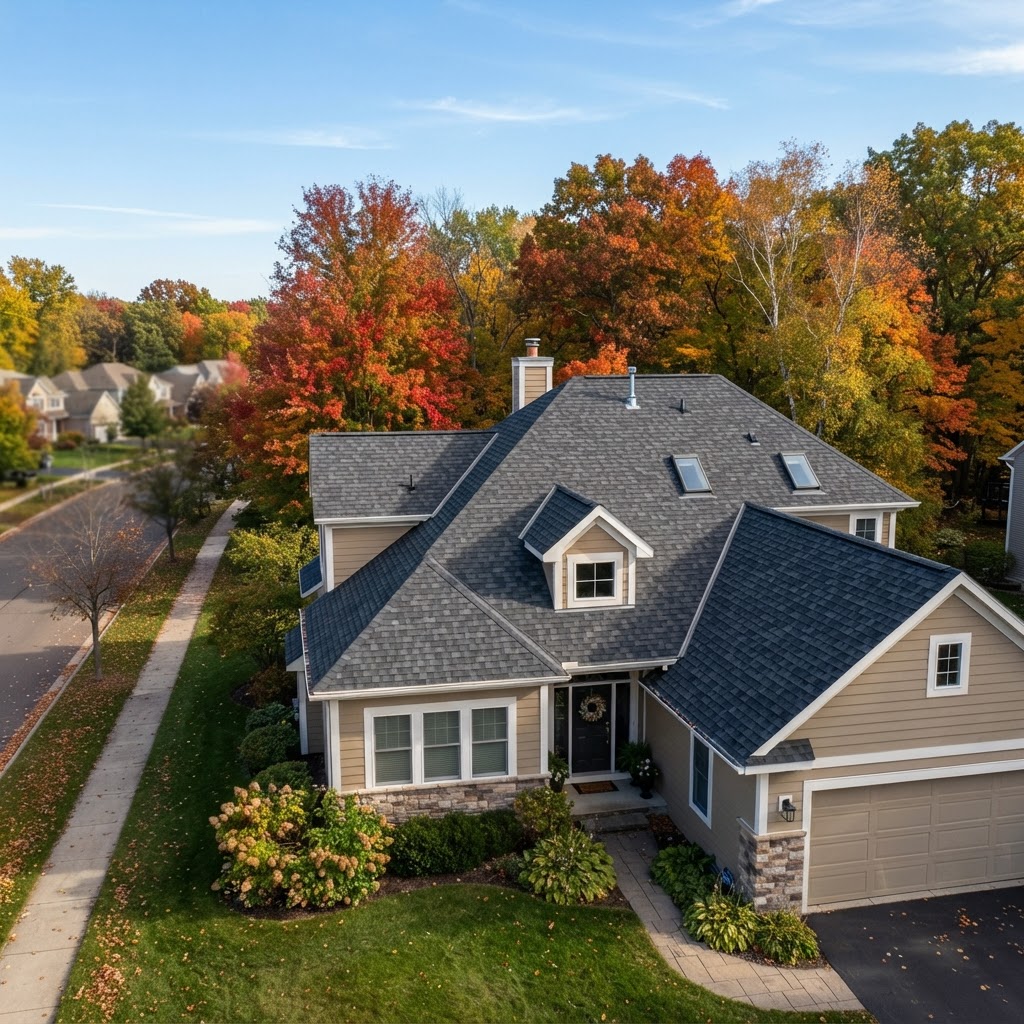
If you own a home in Wyoming, MI, you know the drill: a warm, still morning can turn into a gusty, ten-degrees-colder afternoon by three o'clock. Your roof is the first thing standing between that weather and everything you own. It carries heavy snow load through winter, bakes under summer sun, and takes the wind that comes across Lake Michigan and funnels through the Grand River valley.
Grandville Roofing & Exteriors has been working on homes in Wyoming and the surrounding Kent County communities for more than fifty years. In that time the pattern we see most often isn't dramatic. It's cumulative.
The damage comes from the transitions, not the extremes
The biggest threat to a Wyoming roof usually isn't one violent storm. It's the seasonal swing. When temperatures cross the freezing line over and over — and here they do that dozens of times between November and April — roofing materials expand and contract with every crossing. Over years, that movement loosens shingles, pulls flashing away from chimneys and wall junctions, and cracks the seals around vents and pipe boots.
None of those failures announce themselves. They just quietly become entry points, and by the time water shows up on a ceiling it has usually been getting in for a while.
Two inspections a year, timed to the seasons
We recommend looking twice a year, and the timing matters more than people expect.
Late spring is for assessing winter. Ice dams, if you had them, will have left evidence: stained soffits, damaged gutter hangers, shingles lifted at the eaves. Snow load and freeze-thaw damage are both easiest to spot before summer growth hides them.
Early autumn is for getting ready. This is when you want flashing sound, gutters clear, and any loose shingles fastened — before the first heavy snow rather than after it. A repair scheduled in September is a routine job. The same repair in January is an emergency, in the cold, at whatever price emergency work costs.
What to look for from the ground
You do not need to get on the roof to learn a lot.
Granule loss. Those sand-like particles that coat asphalt shingles are the shingle's UV protection. Finding them collecting in your gutters or at the bottom of downspouts means the shingles are aging out of their protective layer. A handful after a new roof is normal; a steady accumulation years in is not.
Sagging or uneven lines. Any dip or wave along a roof plane suggests something structural underneath — decking that has absorbed water, or a rafter issue. That one warrants a call rather than a wait.
Missing, curled, or cupped shingles. Walk the perimeter of the house and look up at each slope. In Wyoming, the west and south slopes take the prevailing wind and the most direct sun, so it is common for one side of a roof to look years older than the other. That's normal, and it also means a slope can be genuinely finished while the rest of the roof has life left.
Gutters are not a separate system
Wyoming's mature tree cover is one of the nicer things about the older neighborhoods and one of the harder things on gutter systems. A clogged gutter has nowhere to send water except over the edge — down the siding, or backward under the roof decking. Both lead to rot, and the second one is invisible until it isn't.
Twice a year, minimum. More if you have overhanging maples. And check that downspouts actually discharge four to six feet from the foundation rather than straight down beside it.
The one most people skip: attic ventilation
A roof needs to breathe, and a surprising number of homes we inspect can't.
Without balanced airflow — intake low at the soffits, exhaust high at the ridge — summer heat builds under the deck and cooks shingles from beneath, shortening their life from the inside. In winter the same trapped air does something worse: warm indoor air reaches the roof deck, melts the snow sitting on it, and that meltwater runs down to the cold overhang at the eave and refreezes. That's an ice dam, and once one forms, water backs up behind it and works underneath shingles that were only ever designed to shed water flowing downhill.
If your upstairs runs hot in July, or you find frost or damp near the attic rafters in January, the ventilation is worth a professional look. It is often a cheap fix and it protects everything above it.
Worth doing before it's urgent
Most of what we've described costs very little to check and a great deal to ignore. A seasonal inspection, clear gutters, and an attic that breathes will get a Wyoming roof most of the way to the top of its expected life.
If you're unsure what you're looking at, Grandville Roofing & Exteriors is employee-owned, based nearby in Comstock Park, and happy to give you a straight assessment — including telling you when nothing needs doing yet.
Explore Our Services
Ready to Talk About Your Roof?
Free inspections for West Michigan homeowners — no pressure, no obligation.