Roof Ventilation in Kentwood, MI: Why Attic Airflow Decides How Long Your Roof Lasts

If you live in Kentwood, your roof spends the year swinging between two extremes. In July the shingles bake in direct sun. In January the same surface sits under snow while warm indoor air pushes up against it from below. Both of those conditions are survivable. What a roof does not survive well is doing it year after year with an attic that can't breathe. Roof ventilation is the least glamorous part of a roofing system and one of the most consequential. It is also one of the few things a homeowner can partly assess without a ladder. What roof ventilation actually does A properly vented attic is a loop. Cool outside air enters low — through soffit vents along the eaves — travels up the underside of the roof deck, and exits high, through ridge vents, box vents, or gable vents near the peak. Air moves because warm air rises and because wind creates pressure differences across the roof. No fans required in most homes. That loop is doing two different jobs in two different seasons. In summer, it carries heat out. Attic air under a sun loaded roof gets dramatically hotter than the air outside. Without an exit, that heat sits against the roof deck and the shingles above it, and it radiates down into the living space through the ceiling. Shingles are engineered to handle heat, but heat plus time is what ages them. In winter, it does something less obvious but more damaging when it fails. It keeps the roof deck cold. A cold deck means snow on the roof melts from the top down, by sun and air temperature, the way it's supposed to. A warm deck means snow melts from the bottom up — from heat leaking out of the house — and the resulting water runs down to the cold overhang at the eave, where it refreezes. That's an ice dam. Once a dam forms, meltwater backs up behind it and works underneath the shingles, which are designed to shed water flowing downhill, not to hold water sitting still. So the winter failure mode of bad ventilation is not a worn out roof. It's water inside the house. What poor ventilation looks like from the inside You can learn a lot from the attic hatch on a cold morning and again on a hot afternoon. Signs worth taking seriously: Frost or condensation on the underside of the roof deck in winter. Moist indoor air is reaching the attic and hitting a cold surface. When it thaws it drips onto insulation, which then stops insulating. Dark staining or streaking on the sheathing, especially near the ridge. Long term moisture exposure. Insulation that looks matted, compressed, or discolored in spots — often directly above a bathroom, kitchen, or laundry area, which points to a specific air leak rather than a general ventilation problem. An attic that feels close and oven like in summer rather than hot but moving. Musty smell. Soffit vents you can see are blocked — usually by insulation that got pushed into the eaves during an insulation upgrade, or by paint on older aluminum soffit panels. From the ground, ice dams and long icicle lines at the eaves in mid winter are the clearest outside signal. So are shingles that look noticeably more worn on one plane of the roof than another. The mistake that causes most of it The single most common ventilation problem we see in West Michigan homes isn't a missing ridge vent. It's blocked intake. Exhaust without intake doesn't create the loop — it creates suction. A ridge vent with no clear path from the soffits will pull air from the easiest available source, which is often the house itself , through gaps around light fixtures, bath fans, and the attic hatch. That drags conditioned air and indoor humidity straight into the attic, which is exactly what you were trying to prevent. This happens most often after an energy efficiency retrofit. Blown in insulation gets added to the attic floor, it drifts into the eaves, and the soffit vents are buried. The house is better insulated and worse ventilated at the same time. The fix — baffles, sometimes called insulation stops, installed at each rafter bay to hold a clear channel from soffit to attic — is inexpensive and usually accessible. A second common problem is mixed exhaust types. A ridge vent and gable vents on the same attic can short circuit each other: air enters the gable vent and exits the ridge a few feet later, and the far end of the attic never moves at all. What to do about it, in order Before you replace a roof, check the ventilation. A tear off is the cheapest possible moment to correct intake and exhaust, because the deck is exposed and the crew is already there. Correcting it later means going back up. A reasonable sequence: 1. Look in the attic in both seasons if you can. Note frost, staining, matted insulation, and whether daylight is visible at the soffits. 2. Seal air leaks from the house into the attic — around can lights, plumbing stacks, the attic hatch, and bath and kitchen fan ducts. Confirm those fans vent to the outside , not into the attic. This step matters more than adding vents, because it stops the moisture at the source. 3. Clear and protect the intake. Baffles at every rafter bay, insulation pulled back out of the eaves. 4. Then look at exhaust, and match it to the intake you actually have. More exhaust than intake is not an improvement. 5. Insulate to depth across the attic floor once air sealing is done. When it's part of a roof replacement If the roof itself is at the end of its life, ventilation stops being a standalone project and becomes part of the specification. That's the conversation to have before signing anything: what intake exists, what exhaust is planned, whether the two are balanced, and whether the deck showed moisture damage once the old shingles came off. Grandville Roofing & Exteriors is employee owned, has been working on West Michigan homes for more than fifty years, and is a CertainTeed ShingleMaster — a credential that covers installation to the manufacturer's system standards, ventilation included. If you're in Kentwood and you're seeing frost in the attic, ice at the eaves, or a roof that's aging faster on one side than the other, an inspection is the right first step, and it will tell you whether you're looking at a ventilation correction or a replacement. Either way, the attic is where the answer is.

(616) 452-0805
All Articles

Maintenance

Roof Ventilation in Kentwood, MI: Why Attic Airflow Decides How Long Your Roof Lasts
July 29, 2026 7 min read
Roof Ventilation in Kentwood, MI: Why Attic Airflow Decides How Long Your Roof Lasts

If you live in Kentwood, your roof spends the year swinging between two extremes. In July the shingles bake in direct sun. In January the same surface sits under snow while warm indoor air pushes up against it from below. Both of those conditions are survivable. What a roof does not survive well is doing it year after year with an attic that can't breathe.

Roof ventilation is the least glamorous part of a roofing system and one of the most consequential. It is also one of the few things a homeowner can partly assess without a ladder.

What roof ventilation actually does

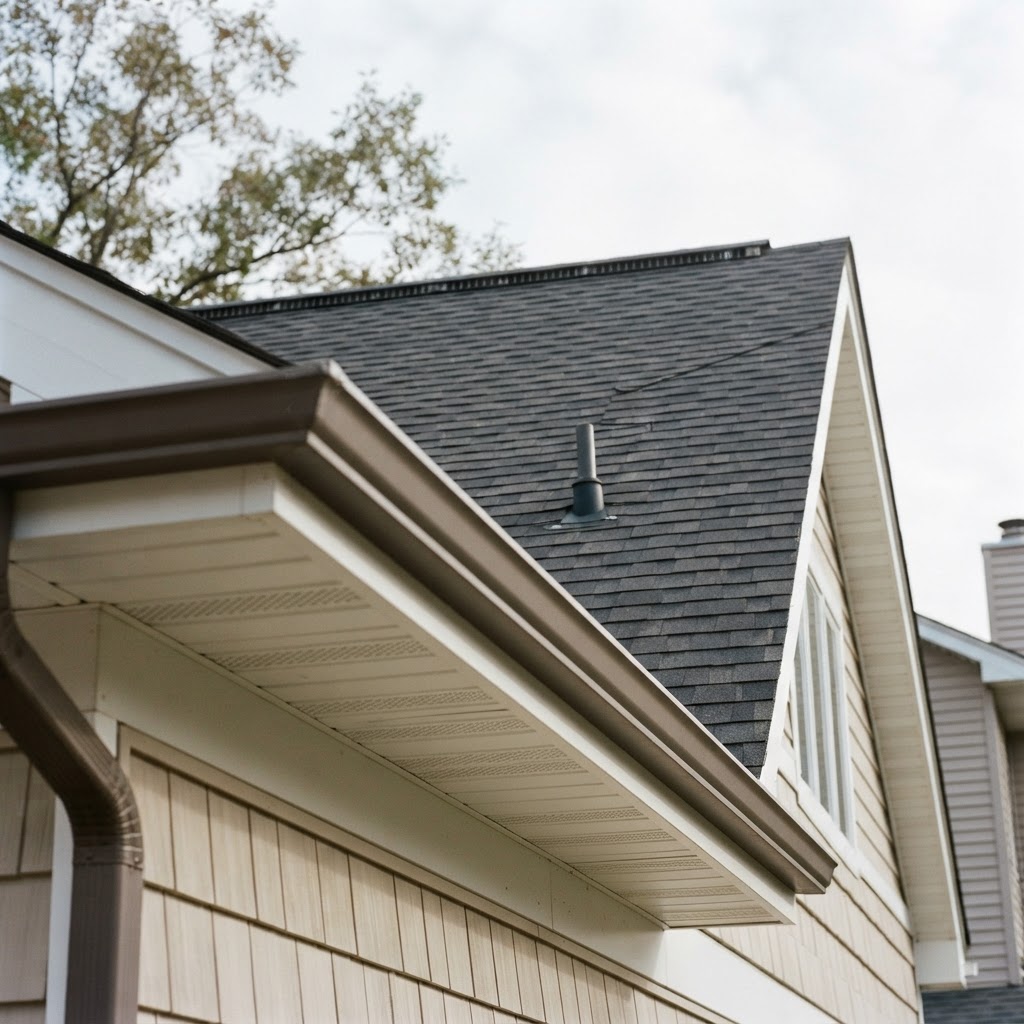
A properly vented attic is a loop. Cool outside air enters low — through soffit vents along the eaves — travels up the underside of the roof deck, and exits high, through ridge vents, box vents, or gable vents near the peak. Air moves because warm air rises and because wind creates pressure differences across the roof. No fans required in most homes.

That loop is doing two different jobs in two different seasons.

In summer, it carries heat out. Attic air under a sun-loaded roof gets dramatically hotter than the air outside. Without an exit, that heat sits against the roof deck and the shingles above it, and it radiates down into the living space through the ceiling. Shingles are engineered to handle heat, but heat plus time is what ages them.

In winter, it does something less obvious but more damaging when it fails. It keeps the roof deck cold. A cold deck means snow on the roof melts from the top down, by sun and air temperature, the way it's supposed to. A warm deck means snow melts from the bottom up — from heat leaking out of the house — and the resulting water runs down to the cold overhang at the eave, where it refreezes. That's an ice dam. Once a dam forms, meltwater backs up behind it and works underneath the shingles, which are designed to shed water flowing downhill, not to hold water sitting still.

So the winter failure mode of bad ventilation is not a worn-out roof. It's water inside the house.

What poor ventilation looks like from the inside

You can learn a lot from the attic hatch on a cold morning and again on a hot afternoon.

Signs worth taking seriously:

  • Frost or condensation on the underside of the roof deck in winter. Moist indoor air is reaching the attic and hitting a cold surface. When it thaws it drips onto insulation, which then stops insulating.
  • Dark staining or streaking on the sheathing, especially near the ridge. Long-term moisture exposure.
  • Insulation that looks matted, compressed, or discolored in spots — often directly above a bathroom, kitchen, or laundry area, which points to a specific air leak rather than a general ventilation problem.
  • An attic that feels close and oven-like in summer rather than hot-but-moving.
  • Musty smell.
  • Soffit vents you can see are blocked — usually by insulation that got pushed into the eaves during an insulation upgrade, or by paint on older aluminum soffit panels.

From the ground, ice dams and long icicle lines at the eaves in mid-winter are the clearest outside signal. So are shingles that look noticeably more worn on one plane of the roof than another.

The mistake that causes most of it

The single most common ventilation problem we see in West Michigan homes isn't a missing ridge vent. It's blocked intake.

Exhaust without intake doesn't create the loop — it creates suction. A ridge vent with no clear path from the soffits will pull air from the easiest available source, which is often the house itself, through gaps around light fixtures, bath fans, and the attic hatch. That drags conditioned air and indoor humidity straight into the attic, which is exactly what you were trying to prevent.

This happens most often after an energy-efficiency retrofit. Blown-in insulation gets added to the attic floor, it drifts into the eaves, and the soffit vents are buried. The house is better insulated and worse ventilated at the same time. The fix — baffles, sometimes called insulation stops, installed at each rafter bay to hold a clear channel from soffit to attic — is inexpensive and usually accessible.

A second common problem is mixed exhaust types. A ridge vent and gable vents on the same attic can short-circuit each other: air enters the gable vent and exits the ridge a few feet later, and the far end of the attic never moves at all.

What to do about it, in order

Before you replace a roof, check the ventilation. A tear-off is the cheapest possible moment to correct intake and exhaust, because the deck is exposed and the crew is already there. Correcting it later means going back up.

A reasonable sequence:

  1. Look in the attic in both seasons if you can. Note frost, staining, matted insulation, and whether daylight is visible at the soffits.
  2. Seal air leaks from the house into the attic — around can lights, plumbing stacks, the attic hatch, and bath and kitchen fan ducts. Confirm those fans vent to the outside, not into the attic. This step matters more than adding vents, because it stops the moisture at the source.
  3. Clear and protect the intake. Baffles at every rafter bay, insulation pulled back out of the eaves.
  4. Then look at exhaust, and match it to the intake you actually have. More exhaust than intake is not an improvement.
  5. Insulate to depth across the attic floor once air sealing is done.

When it's part of a roof replacement

If the roof itself is at the end of its life, ventilation stops being a standalone project and becomes part of the specification. That's the conversation to have before signing anything: what intake exists, what exhaust is planned, whether the two are balanced, and whether the deck showed moisture damage once the old shingles came off.

Grandville Roofing & Exteriors is employee-owned, has been working on West Michigan homes for more than fifty years, and is a CertainTeed ShingleMaster — a credential that covers installation to the manufacturer's system standards, ventilation included. If you're in Kentwood and you're seeing frost in the attic, ice at the eaves, or a roof that's aging faster on one side than the other, an inspection is the right first step, and it will tell you whether you're looking at a ventilation correction or a replacement.

Either way, the attic is where the answer is.

Ready to Talk About Your Roof?

Free inspections for West Michigan homeowners — no pressure, no obligation.