
Maintenance
Why Kentwood, MI Freeze-Thaw Cycles Wreak Havoc on Your Roof (And What to Do About It)
If you've lived in West Michigan for any length of time, you know our weather has a personality all its own. One day it's 45 degrees and sunny, the next we're buried under lake-effect snow. Those dramatic swings aren't just tough on your commute—they're tough on your roof.
At Grandville Roofing & Exteriors, we've spent over 50 years helping homeowners across Grand Rapids, Holland, Grandville, and the surrounding communities deal with the unique challenges of Michigan weather. Here's what every West Michigan homeowner should understand about freeze-thaw cycles and how to protect their home.
What Is a Freeze-Thaw Cycle?
A freeze-thaw cycle happens when temperatures drop below freezing at night and climb above freezing during the day. Along the Lakeshore and throughout Kent and Ottawa Counties, these cycles can happen dozens of times each winter and early spring. When moisture from snow, ice, or rain seeps into tiny cracks in your shingles, flashing, or gutters, it freezes and expands. When it thaws, the water travels deeper. Repeat that process 30 or 40 times, and small vulnerabilities become serious problems.
The Damage You Can't Always See
Freeze-thaw damage often starts quietly. You might notice granules collecting in your gutters, a slightly lifted shingle, or a small water stain on your ceiling. By the time these signs appear, water may already be working its way beneath your roofing system. Common trouble spots include:
- Roof valleys where snow and ice accumulate
- Flashing around chimneys and skylights
- Gutters that haven't been cleaned before winter
- Vents and pipe boots that have cracked or dried out
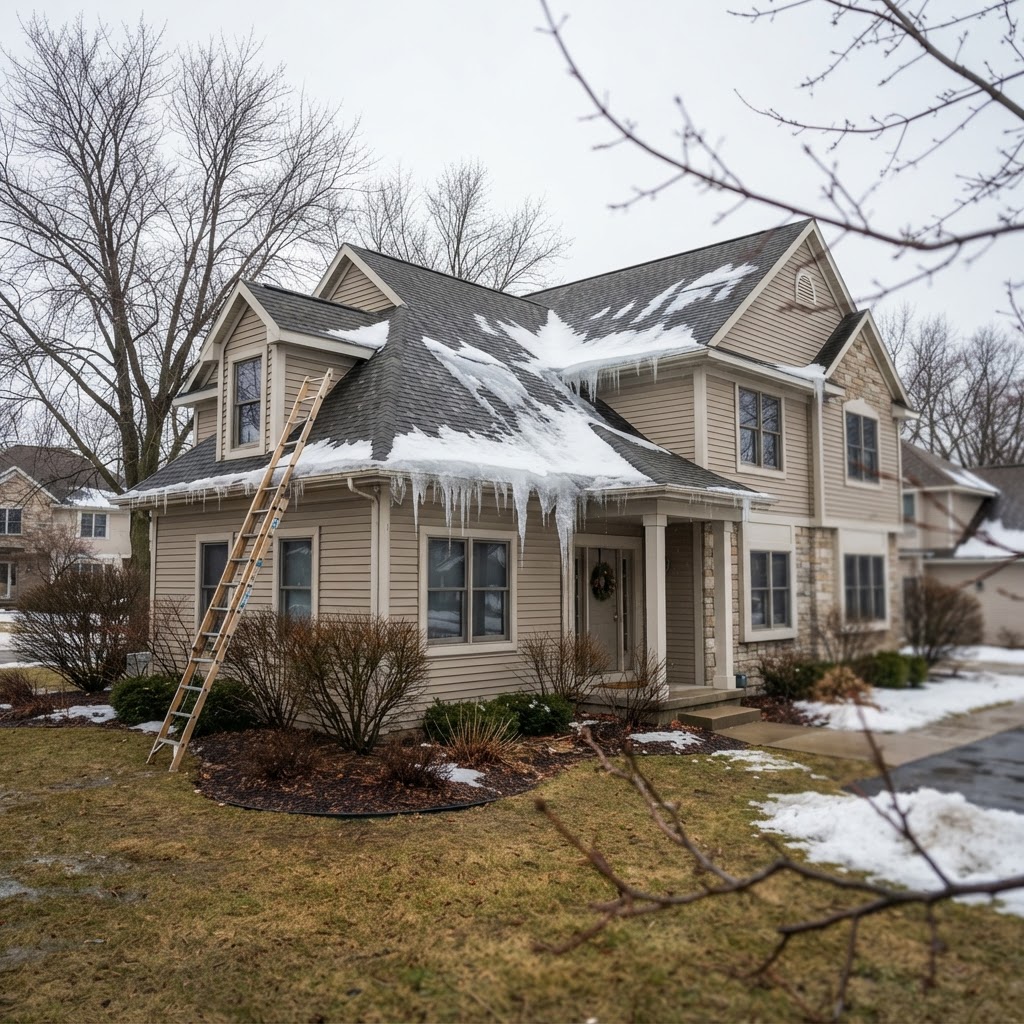
Ice dams are another classic West Michigan problem. When heat escapes from your attic, it melts snow on the upper roof. That meltwater runs down to the colder eaves and refreezes, creating a dam that forces water back up under your shingles.
Practical Steps to Protect Your Home
-
Schedule a spring roof inspection. After a long winter, a professional inspection catches damage early—before spring rains turn small leaks into major interior damage.
-
Keep gutters clear. Clogged gutters freeze and contribute to ice dams. Clean them in late fall and check them again in early spring.
-
Check your attic ventilation. Proper airflow keeps your roof deck cool and reduces the melting that leads to ice dams.
-
Watch for warning signs. Curling shingles, dark streaks, granule loss, and interior stains all warrant a professional look.
-
Address repairs promptly. A single damaged shingle can let in enough water to ruin insulation and drywall over a season.
A Local Company That Understands Local Weather
We've been repairing and replacing roofs across West Michigan since the 1970s. We know how lake-effect snow, humidity, and temperature swings affect different roofing materials, and we install systems designed to handle Michigan's toughest conditions. Whether you need a quick repair after a rough winter or a full roof replacement, our team is here to help.
Don't wait until a small winter problem becomes a spring emergency. Contact Grandville Roofing & Exteriors today to schedule your inspection.
Explore Our Services
Ready to Talk About Your Roof?
Free inspections for West Michigan homeowners — no pressure, no obligation.