Roofing Options
Architectural Shingles vs 3-Tab Shingles What is the Difference
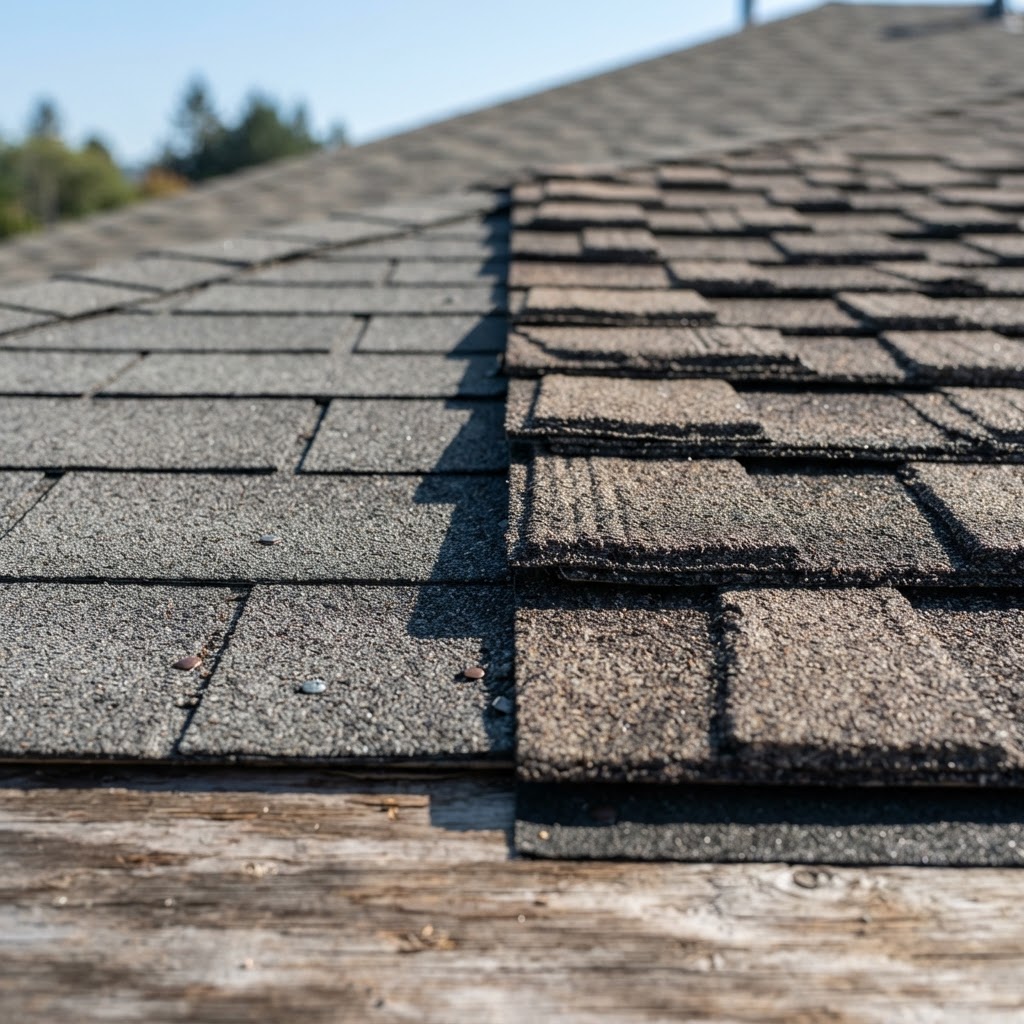
Architectural shingles use two bonded layers of asphalt to create a thick, dimensional profile that resists high winds and ice dams. In contrast, 3-tab shingles consist of a single, flat layer cut into three uniform tabs. While 3-tab shingles offer a budget-friendly flat look, architectural shingles provide the structural weight needed to survive our heavy lake-effect snow.
Why does thickness matter in Comstock Park
Thickness determines how well your roof holds up against our freeze-thaw cycles. When you look at an architectural shingle, you see a heavier, multi-layered product that stays flexible as temperatures swing from freezing nights to sunny days in Comstock Park. A 3-tab shingle is thin enough that the constant expansion and contraction can cause the tabs to lift or crack over time. If you have ever seen strips of asphalt shingles torn off after a July thunderstorm in Kent County, they were almost always the thinner 3-tab variety.
Can a roof handle West Michigan ice dams
Architectural shingles shed snow more effectively because their textured surface breaks up the sheet of ice. Those deep grooves between the shingle layers disrupt the path of melting water. A 3-tab roof is flat, which lets water pool and refreeze right under the edge of the shingles. That standing water is the primary culprit behind the water stain you find on your bedroom ceiling once spring finally rolls around.
How do they perform in high winds
Architectural shingles are rated for higher wind speeds because they are heavier and bond more tightly to the roof deck. You know the dread of hearing shingles flapping against the plywood at three in the morning during a heavy wind event. Because 3-tab shingles are lightweight, they act like a sail, catching the wind and peeling back from the nails. The extra weight of an architectural shingle keeps it pinned down when the wind picks up across the Grand River valley.
What is the trade-off in cost and installation
Architectural shingles cost more upfront due to the weight of the materials, but they bridge the gap by lasting longer. Installing them takes a bit more time because they are heavier to haul up a ladder and require more precision at the valleys and ridges. While the 3-tab option keeps your initial bill smaller, you have to account for the likelihood of needing repairs sooner. You are choosing between a lower price today and a more stable roof for the next decade.
Frequently asked questions
Do architectural shingles make my house look different? Yes, they provide a deep, dimensional look that mimics natural wood shakes or slate. A 3-tab shingle gives your home a uniform, flat, and traditional appearance.
Which shingle type is easier to repair? Both are standard, but 3-tab shingles are often easier to match because they have been a universal standard for decades. Architectural shingles vary by brand and profile, making an exact color match trickier if your roof is older.
Should I choose based on my home's slope? A steeper roof helps both types shed water, but architectural shingles are often required on steep pitches for the aesthetic depth they add to the house. If you have a low-slope roof, the added water resistance of the thicker architectural design is usually the smarter pick.
When to call a roofer
If you see curled edges, missing tabs, or loose granules piling up in your gutters, it is time to have a professional take a look. You deserve to know exactly what is happening above your head before the next storm hits. Give the team at Grandville Roofing & Exteriors a call to get an honest assessment of your current roof condition.
Explore Our Services
Ready to Talk About Your Roof?
Free inspections for West Michigan homeowners — no pressure, no obligation.